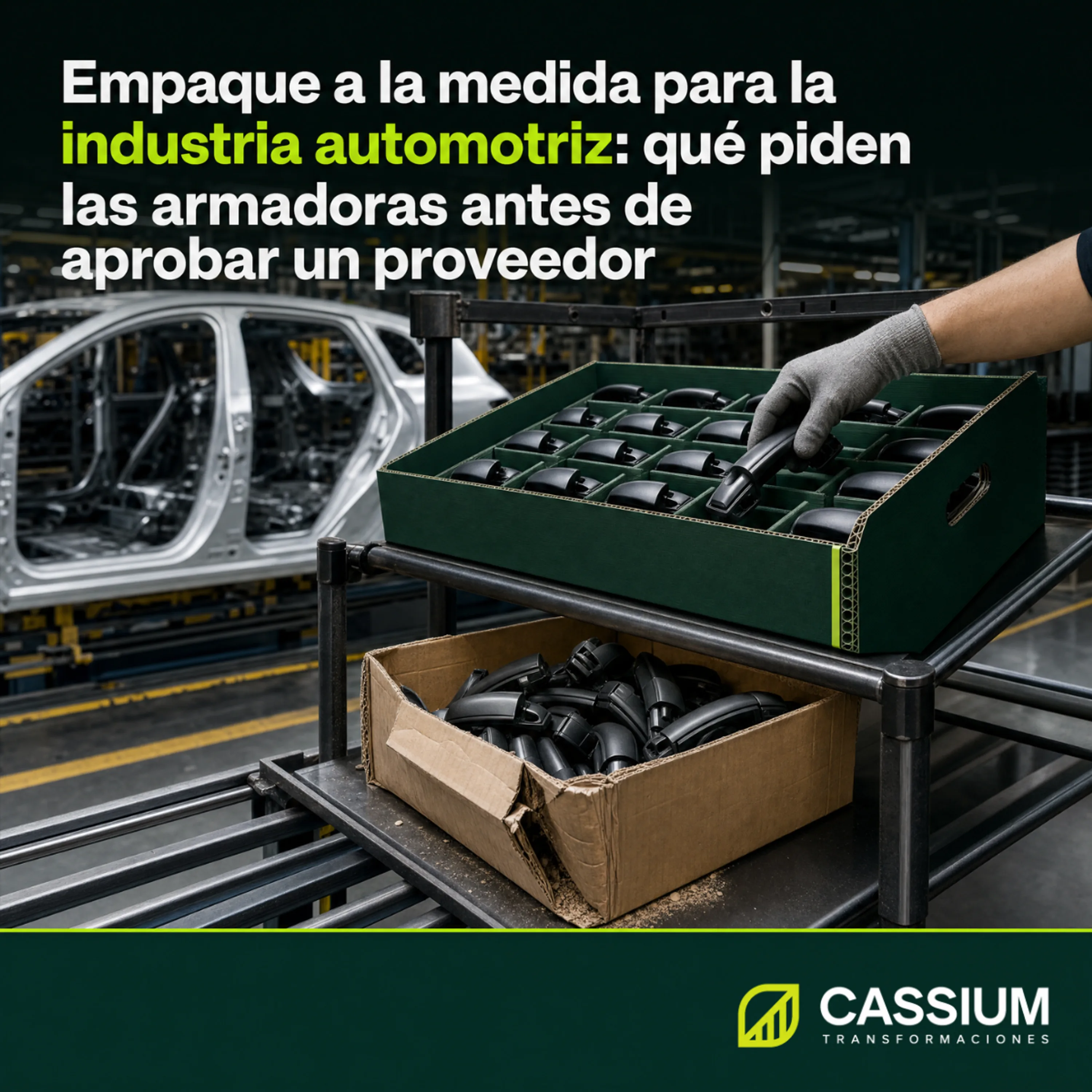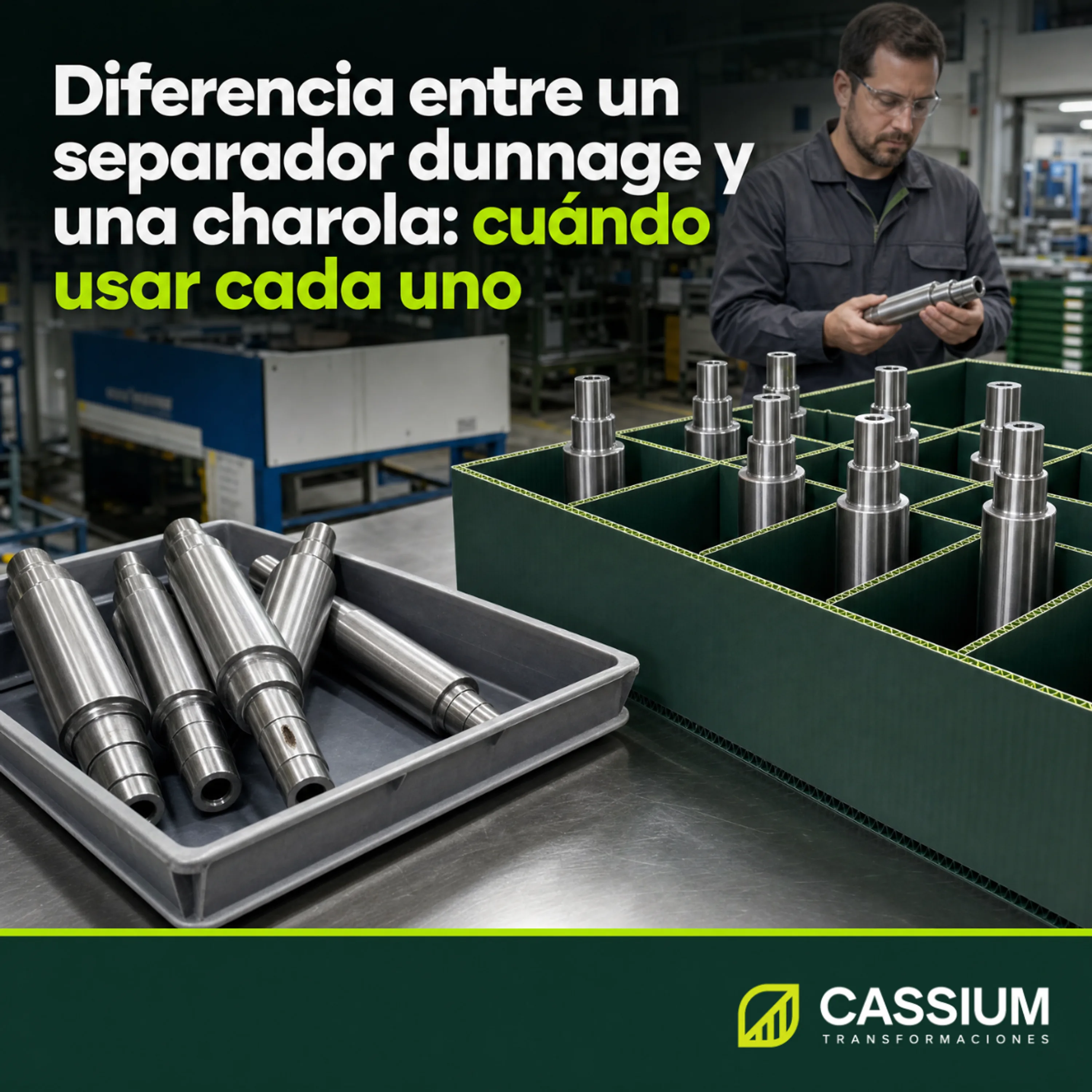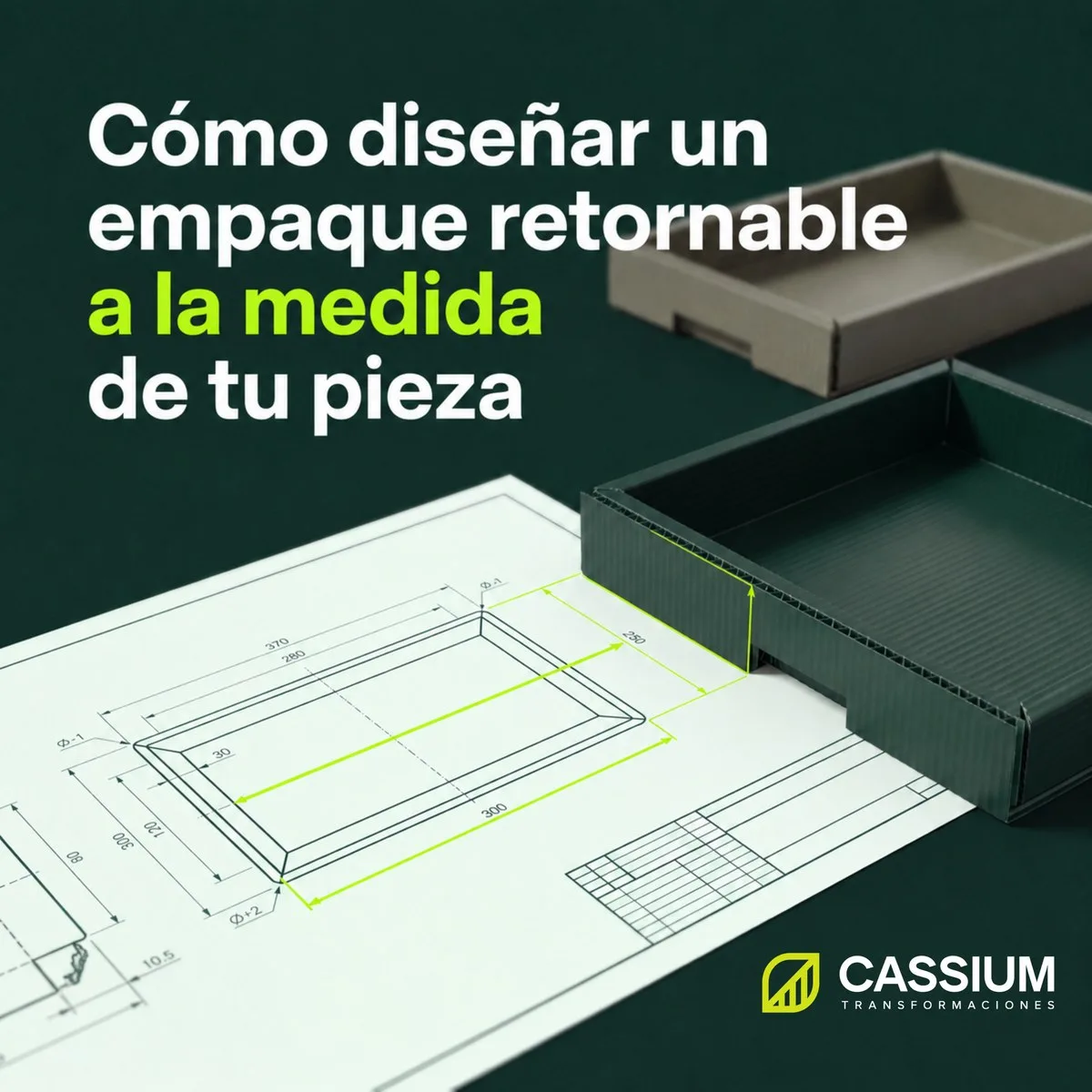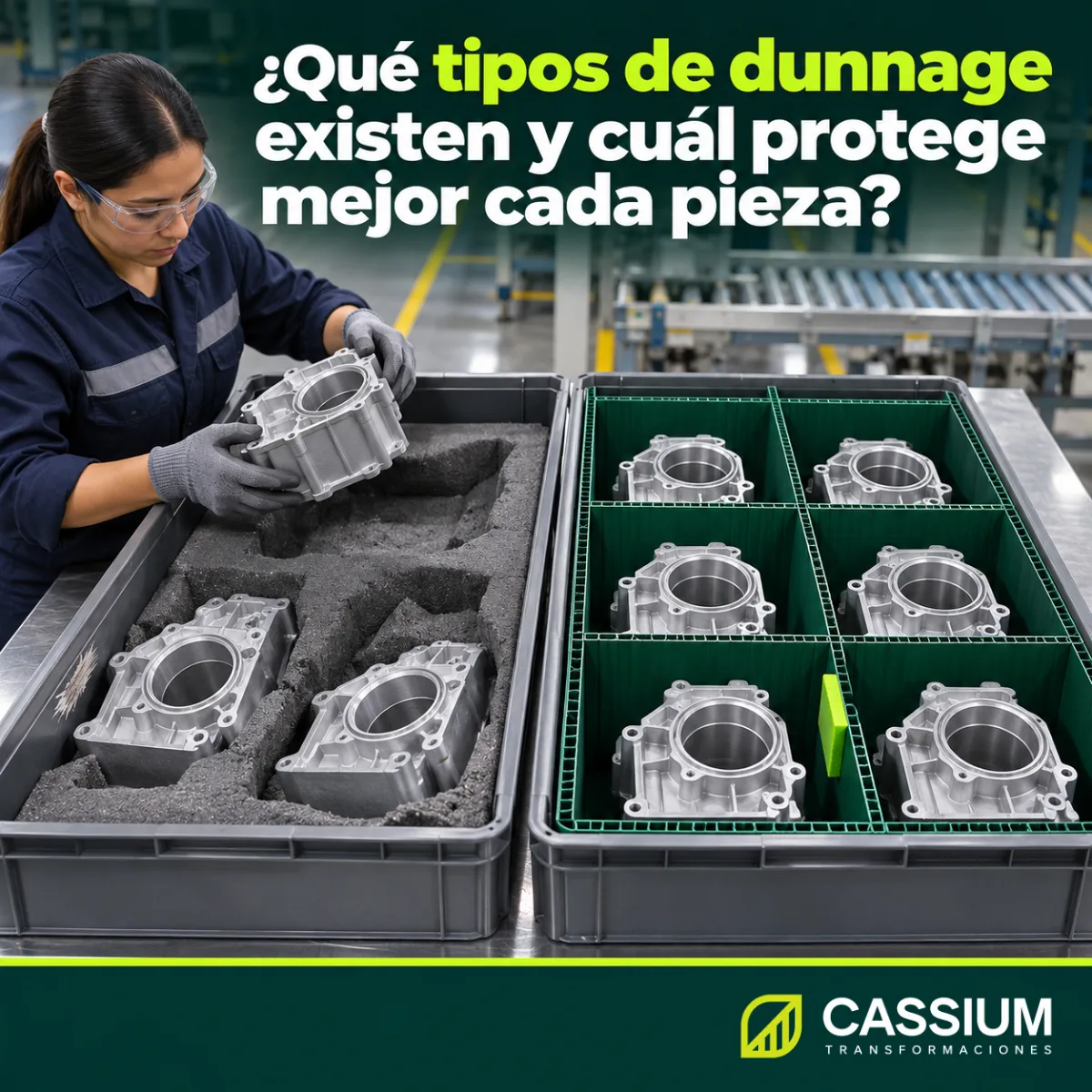
There are five dunnage families: rigid sheet, molded, foam, textile and disposable fill. Each one best protects a type of part based on its weight, its surface, how it is picked, the cycles and the environment of the loop.
Why a single type of dunnage is not enough for all your parts
Dunnage is all the material inside the container that holds, separates and immobilizes the part during handling and transport. The container carries the weight and withstands the stacking; the dunnage decides whether the part arrives the same way it left. Each dunnage family responds to a different stress, which is why the one that protects an electronic board well can fail with a metal housing in the same loop.
The four forces dunnage has to control
Inside a container in transit, the part takes four stresses: its own weight and the weight of the parts above it, truck vibration, the impact of every stop and start, and rubbing against whatever surrounds it. Soft dunnage absorbs vibration and impact well, but it crushes under weight. Rigid dunnage withstands weight and fixes position, and it needs a well-calculated clearance so it does not transmit impact to the part.
Returnable or disposable, the first split
Before choosing the family, define whether the dunnage is coming back. Returnable dunnage travels with its container within a closed loop and is designed for many cycles. Disposable dunnage goes with a one-way shipment and is thrown away or recycled at the destination. That decision changes the material, the acceptable cost per part and the way it is cleaned.
The five dunnage families and the weak point of each one
Each family has a material, a way of holding the part and a weak point worth knowing before you request a quote.
Rigid sheet dunnage, with separators, dividers and corrugated trays
It is made from corrugated polypropylene sheet that is cut, folded and joined by ultrasonic welding. It takes the form of vertical separators that create cells, slotted dividers assembled inside a box, trays with folded cavities and sheets that separate layers of product. It is light, does not absorb water, can be washed, does not shed particles and adapts to a new part with a cutting adjustment, without building an injection mold. Its weak point is the hard surface. On parts with a very sensitive finish, contact is designed with controlled clearance or with a soft lining in the support area.
Molded dunnage, with thermoformed and injection-molded trays
Thermoformed trays are made by heating a plastic sheet over a mold that copies the geometry of the part. Injection-molded trays are made in a closed mold and produce thicker, stiffer pieces. Both hold the part in an exact, repeatable position, which is why they work well on robotic lines. In exchange, they require one mold per geometry, and every part number change means building another.
Foam dunnage, with cavities cut to the silhouette of the part
Polyethylene or polyurethane foam is cut to the silhouette of the part and hugs its contour. It absorbs vibration very well and protects delicate surfaces, which is why it shows up in instruments, electronic components and glass parts. Under high weight it compacts and loses its shape. Open-cell foam also retains dust, oil and chips, which then scrub the next part.
Textile dunnage, with fabric pockets inside the container
Textile dunnage is made of fabric pockets or sleeves hung from bars inside a metal or plastic container. The fabric wraps large parts with a visible finish, such as body panels or bumpers, and folds away when the container goes back empty. Its weak point is cleaning. Fabric absorbs oil, moisture and dirt, is hard to wash and wears at the seams, so it calls for frequent inspection.
Disposable fill, from paper and bubble wrap to cardboard and air bags
Fill takes up the gaps around the part so it does not shift. Crumpled paper, bubble wrap, air bags and cardboard dividers do that job in one-way shipments. Their cost per shipment is low, but it repeats with every shipment, generates waste at your customer's plant and loses strength with moisture. In a loop with many trips, disposable fill is the first expense worth replacing.
The six variables that pick the right family
The family is chosen with the part in hand and the loop on the table. These are the six variables we review before proposing a design.
- Part weight and number of parts per container, because they define whether a soft material can bear the load without crushing.
- Sensitive area, such as a painted finish, sealing face, terminals or threads that cannot take contact.
- Geometry, meaning tall, flat or irregular parts, or parts with protrusions that need support at a specific point.
- Picking method, whether manual, robotic or by conveyor, because each one calls for a different position and access.
- Expected cycles, from a single shipment or one season to several years in a closed loop.
- Route environment, including oil, moisture, washing, temperature and electrostatic charge.
Which dunnage best protects each type of part
With those variables, each part profile points to a family. These are the profiles we find most often in automotive, electronics, food and general manufacturing, and the protection that works best for them.
Painted parts or parts with a visible finish
For large parts with a visible finish, such as panels or moldings, textile dunnage and sheet separators with controlled clearance both work. The fabric wraps the whole surface. A corrugated polypropylene separator can be washed, does not hold the dirt that scratches and lasts more cycles, so it preserves the finish longer on lines with dust or oil.
Heavy or metal parts
A housing, a gear or a cast part needs dunnage that bears the weight without deforming. High-gauge rigid sheet with ultrasonic joints and injection-molded dunnage do that job. Foam and fabric stay only as a lining in the contact area, because as the main support they compact or stretch under the weight and let the part hit the container.
Parts with oil, chips or moisture
Machined parts, shafts with protective oil and components coming out of a wash need dunnage that does not absorb what the part carries. Corrugated polypropylene and molded plastic can be washed and go back into the loop clean. Open-cell foam and fabric retain oil and chips, and that mix scratches the next part that goes into the same cavity.
Electronic components
Boards, sensors and modules with electronics need electrostatic charge control as well as retention. The options that work here are corrugated polypropylene sheet in its antistatic version, known as ESD for electrostatic discharge, and foams or molded trays with the same property. Common dunnage can hold the part well and still build up a charge that damages the component without leaving a visible mark.
Small, numerous parts
Fasteners, terminals, clips and seals travel better in boxes with dividers or in low-level trays, with one cell per part or per counted lot. Foam and fill let small parts mix together or get lost at the bottom of the container.
One-way shipments
If the part travels once to a destination that does not return the packaging, disposable fill or simple sheet dunnage covers the shipment. If that same destination receives shipments every week, it pays to calculate the cost per cycle of returnable dunnage before you keep paying for fill on every trip.
When a single part needs two dunnage families
Many parts combine strong areas and delicate areas, and the dunnage that protects them best mixes materials. The rigid sheet structure carries the weight and fixes the position, and a strip of foam or fabric at the contact point protects the sensitive face. That combination keeps the strength and cleanliness of corrugated sheet and puts soft material only where it is needed. The lining is designed to be replaced without changing the whole separator.
Mistakes that end in a redesign with the line running
The most expensive dunnage redesigns share a common origin: the family was chosen before anyone knew the part and its loop.
- Repeating the dunnage from the previous program for a part with a different weight or finish.
- Choosing foam for heavy parts because it protected well in the first test, before it compacted.
- Using fabric or open-cell foam on parts that come off the machine with oil or chips.
- Paying for a thermoforming mold for a part number that may change within a few months.
- Sending disposable fill to a destination that receives shipments every week.
How we choose the dunnage for each part with you
At Cassium Transformaciones we extrude corrugated polypropylene sheet at our plant in Monterrey and convert it into custom separators, dividers, trays and boxes, with cutting, folding, ultrasonic welding and printing. We make antistatic versions, versions with an ultraviolet filter and versions in the color of your process. Before proposing a design, we review the actual part, its weight, its sensitive area, how it is picked and the cycles you expect, and we validate the proposal with a prototype loaded with your part.
If all your parts travel with the same dunnage today, one of them is getting protection that does not fit it. At Cassium Transformaciones we design and manufacture custom dunnage in Monterrey, with sheet from our own extrusion and a prototype before the fleet. Tell us which part you need to protect on our contact page.