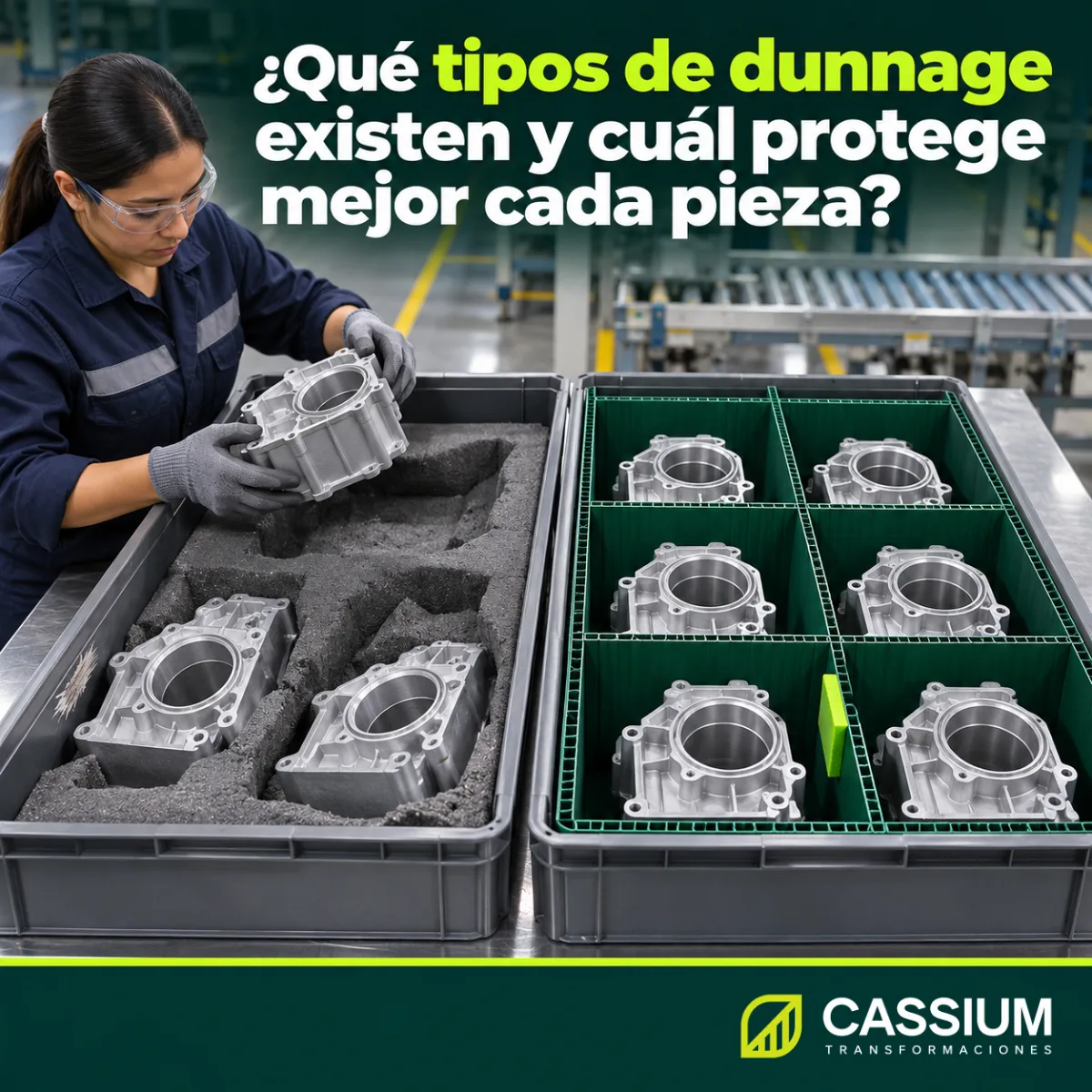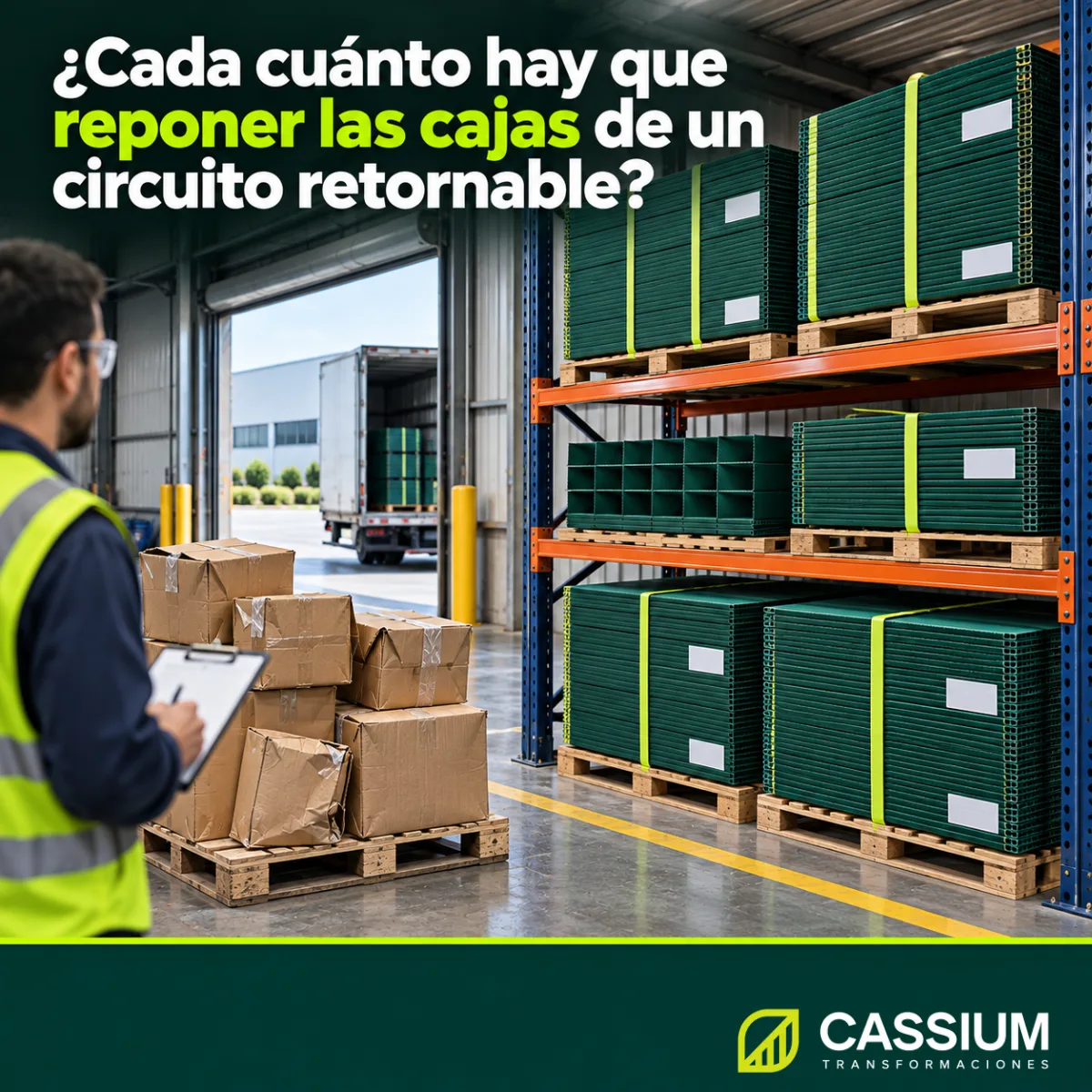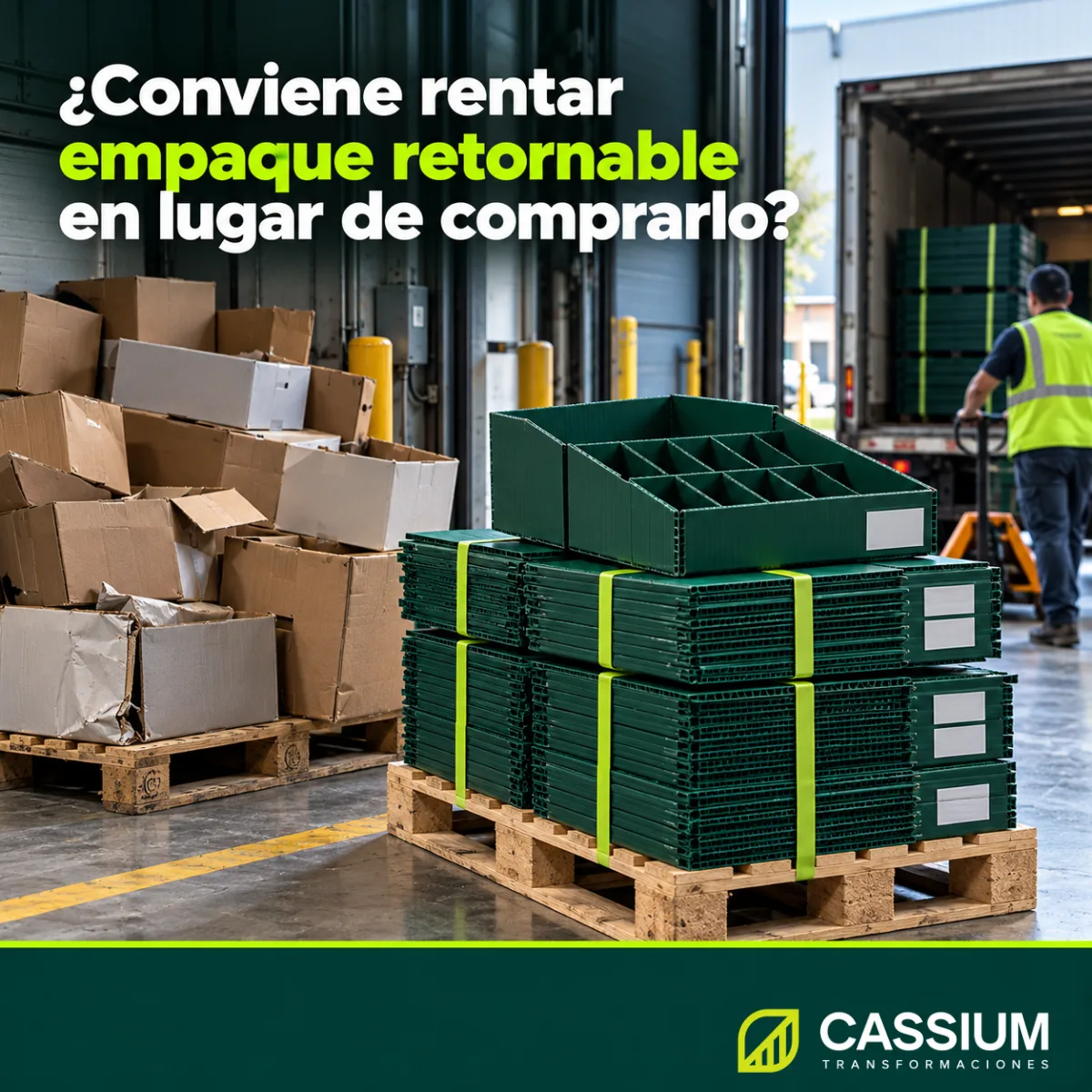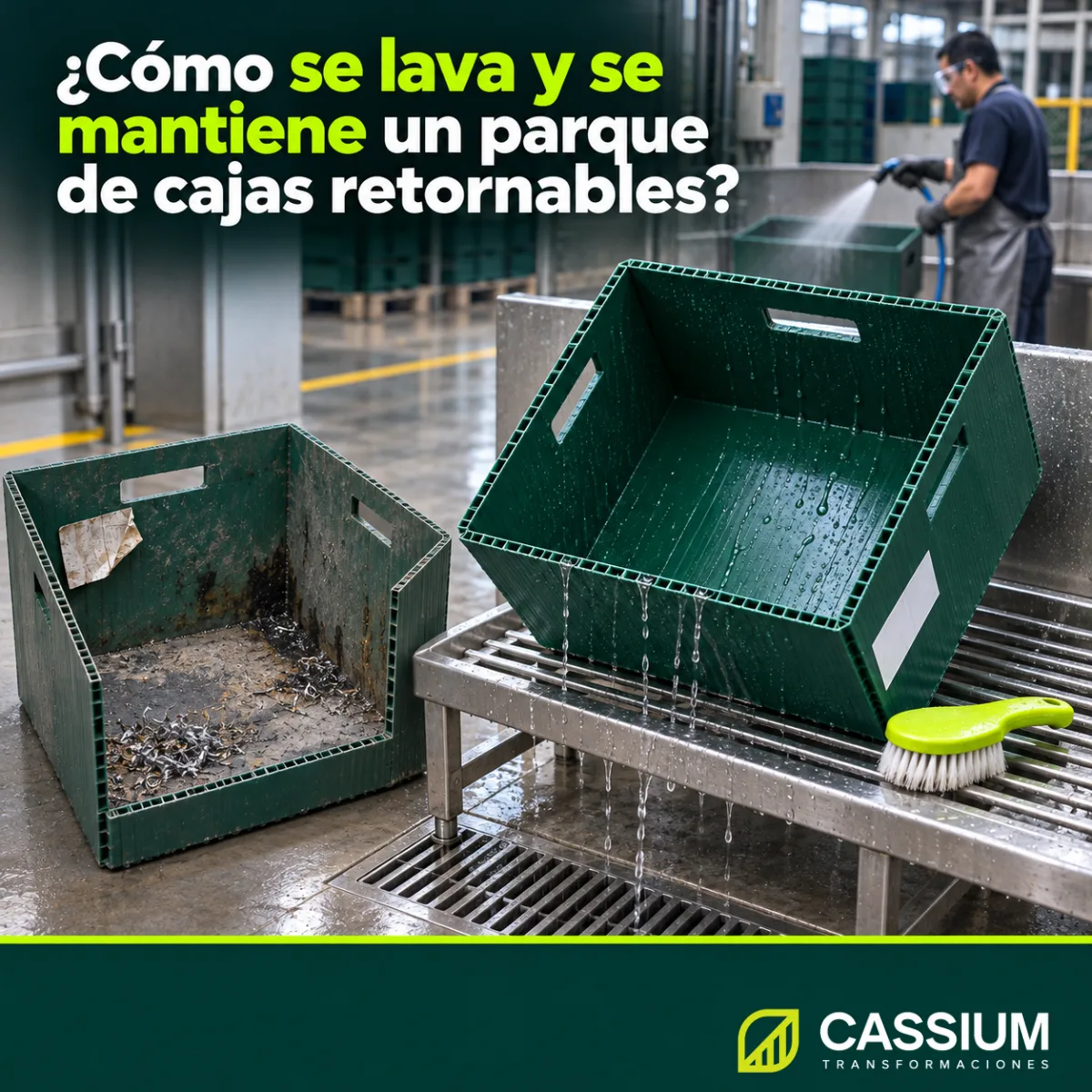
A returnable box fleet is maintained with a routine every cycle. Washing with water and neutral detergent, complete drying, inspection of corners, hinges and lids, divider repair and label checks, all with an owner and a record.
Why a box in one piece can be out of service
A returnable box does three jobs at once: it protects the part, identifies it and moves it through the loop. When the fleet is neglected, the boxes stay in one piece and the operation keeps using them, but one of those three jobs stops getting done. A dirty bottom contaminates the part, a broken divider lets it move and a faded label sends it to the wrong place.
The dirt that travels with the part
Corrugated polypropylene has a closed surface that absorbs little dirt, which is why it cleans well. The problem shows up when nobody cleans it. Dock dust, chips from the previous part and oil residue build up on the bottom and in the inside corners, and every new part that goes into the box picks up some of that residue. On paint, electronics assembly or food lines, that contamination ends in a rejection your customer charges to your account.
The wear nobody checks until the box fails
Hinges, corners and joints take all the stress of every cycle. A hinge starting to split, a corner hit by a forklift or a lid that no longer closes on the first try are warnings that the box needs attention. If the fleet has no scheduled inspection, those warnings are discovered the day the box gives way with the part inside.
How to wash a corrugated polypropylene box without damaging it
Washing is the part of maintenance that raises the most questions, because many plants are afraid of damaging the box or its printing. Corrugated polypropylene tolerates washing well, as long as a few conditions are respected.
Water, neutral detergent and moderate pressure
For most fleets, warm water and a neutral detergent are enough, applied with a pressure washer at moderate pressure or in a washing tunnel. Harsh solvents and concentrated chlorine cleaners attack the printing and, over time, dry out the material's surface. A soft-bristle brush removes residue stuck in the inside corners without scratching the wall.
The temperature the material can take
Polypropylene keeps its shape with warm or hot water within the range of an industrial washing tunnel. The risk comes with very hot water or direct steam on a box stacked under load, because the material softens and the wall can stay deformed once it cools. If your plant uses a washing tunnel, validate the temperature with a trial batch before running the whole fleet through it.
Complete drying before reloading
A box loaded while wet holds water in the corrugated flutes and in the folded corners. That moisture travels with the part, rusts metal terminals and stains painted parts. Drying is handled by draining the boxes at an angle and using ambient air or warm forced air. Collapsible boxes dry open, because folded they hold water in every crease.
What wears polypropylene down over time
Three things shorten a box's life more than its cycles of use. Prolonged sun exposure in an open yard makes the material brittle, unless the sheet carries an additive against ultraviolet radiation. Frequent contact with oils and solvents dries out the surface and loosens the printing. And floor stacking under load for weeks deforms the walls permanently.
The inspection that separates a useful box from one that already costs money
After washing, each box goes through a brief inspection. It takes a minute per box when the team knows what to look for, and that minute keeps a damaged box from going back into the loop.
Corners, joints and walls
Corners take the hits from forklifts and pallet jacks. A corner with crushed corrugation loses load capacity and gives way under stacking. On ultrasonically welded joints, check that the weld line is still closed along its full length; on boxes with rivets or staples, that none is loose. A wall with a visible crack no longer protects the part, and the box leaves the loop until it is repaired.
Hinges and lids
On a collapsible box, the hinge is the fold line that opens and closes every cycle. Check that it folds without resistance and that the material shows no whitening or cracks along the crease. The lid has to sit flat and close without forcing; a lid that does not close lets in dust and water and also makes the stack less stable.
Dividers, separators and trays
Inner dividers hold the part and are the component that gets damaged most, because the part hits them on every trip. A broken divider leaves the part loose, and the box loses its reason for being even if the body is perfect. Dividers are checked one by one, and damaged ones are replaced as spare parts; in many designs the divider is interchangeable and does not force you to replace the whole box.
Labels, printing and RFID
Container identification is what brings the fleet back. Check that the printing is still legible, that the barcode label is neither peeling nor scratched and that the RFID tag, when the box has one, responds to the reader. A box the system does not recognize stays on your customer's dock and ends up counted as lost.
How to organize the per-cycle routine so it does not depend on goodwill
A fleet stays in shape when maintenance is part of the flow, with a place, an owner and a record. If it stays a task someone does when they have time, it stops happening in the first week of heavy loading.
The empty-box receiving station
Every box that comes back goes through a receiving area before it returns to the empty-box warehouse. There it is counted, sorted and sent to washing, repair or retirement. That area needs room for incoming stacks, the washing and drying area and a separate rack for boxes under repair. Without that physical separation, damaged boxes mix with good ones and go back into the loop.
Frequency based on the part and the destination
Washing frequency follows the part, whatever the calendar says. A box that moves painted parts, electronic components or food products is washed every cycle. A box that moves unfinished metal parts can be washed every set number of cycles and get only a dry cleaning between trips. What counts is writing down the rule for each box family and sticking to it.
Records by box and by lot
Each identified box lets you record how many cycles it has run, when it was washed, what was repaired and when it left service. With that record, the person in charge of the fleet knows which families wear out fastest, which customer returns the dirtiest boxes and when to plan replacement.
Repair what you can, retire what you cannot
A broken divider, a peeling label or a lost lid are solved with spare parts. A cracked wall, a hinge split along its full length or a crushed corner are damage that compromises the load, and that box leaves the loop. Keeping a box that no longer protects the part costs more than replacing it, because the damage shows up in the shipment instead of in the yard.
What your supplier can solve from the design stage
A good share of maintenance is decided before the first box is made. These are the points we review with every customer when the fleet will be washed regularly:
- Sheet with an additive against ultraviolet radiation if empty boxes will wait in the yard.
- Ultrasonically welded joints instead of staples or tape, so washing and moisture do not loosen them.
- Direct printing on corrugated plastic, which holds up to washing better than an adhesive label.
- Interchangeable dividers and separators, to replace the damaged component without changing the box.
- Drain holes in the bottom when washing is done in a tunnel, so the box drains on its own.
- A collapsible design that dries open and is stored clean in a fraction of the space.
At Cassium Transformaciones we extrude our own corrugated polypropylene sheet and make boxes, containers, trays and dividers at the same plant in Monterrey, under an ISO 9001:2015 certified quality management system. We design each returnable box to reach up to 40 uses with the normal handling of your loop, and we deliver a prototype so you can validate washing, drying and the inspection routine before we build the fleet.
If your boxes go back into the loop without washing or inspection, the next rejection for contamination or a loose part is already on its way. At Cassium Transformaciones we design custom returnable packaging in Monterrey, built to be washed, repaired and last the cycles your operation needs. Tell us how your fleet moves and comes back on our contact page.