The Scrap No One Connects to Packaging Until It Gets Expensive
When a scratch shows up on a painted part, the first check usually points to operator handling or the transport route. Those are reasonable hypotheses, but they leave out the most common cause in automotive: a generic separator that wasn't designed for that part's exact geometry, allowing direct contact that the right design would have prevented.
Why a Generic Separator Doesn't Solve the Problem
A standard dunnage separator can hold the part in place for part of the trip, but if it isn't designed to fit its geometry, it leaves rigid contact points between parts or between the part and the separator itself. That contact, repeated with every bump or hard stop during transport, is what causes the scratch.
What a Dunnage Separator Actually Is and How It's Designed
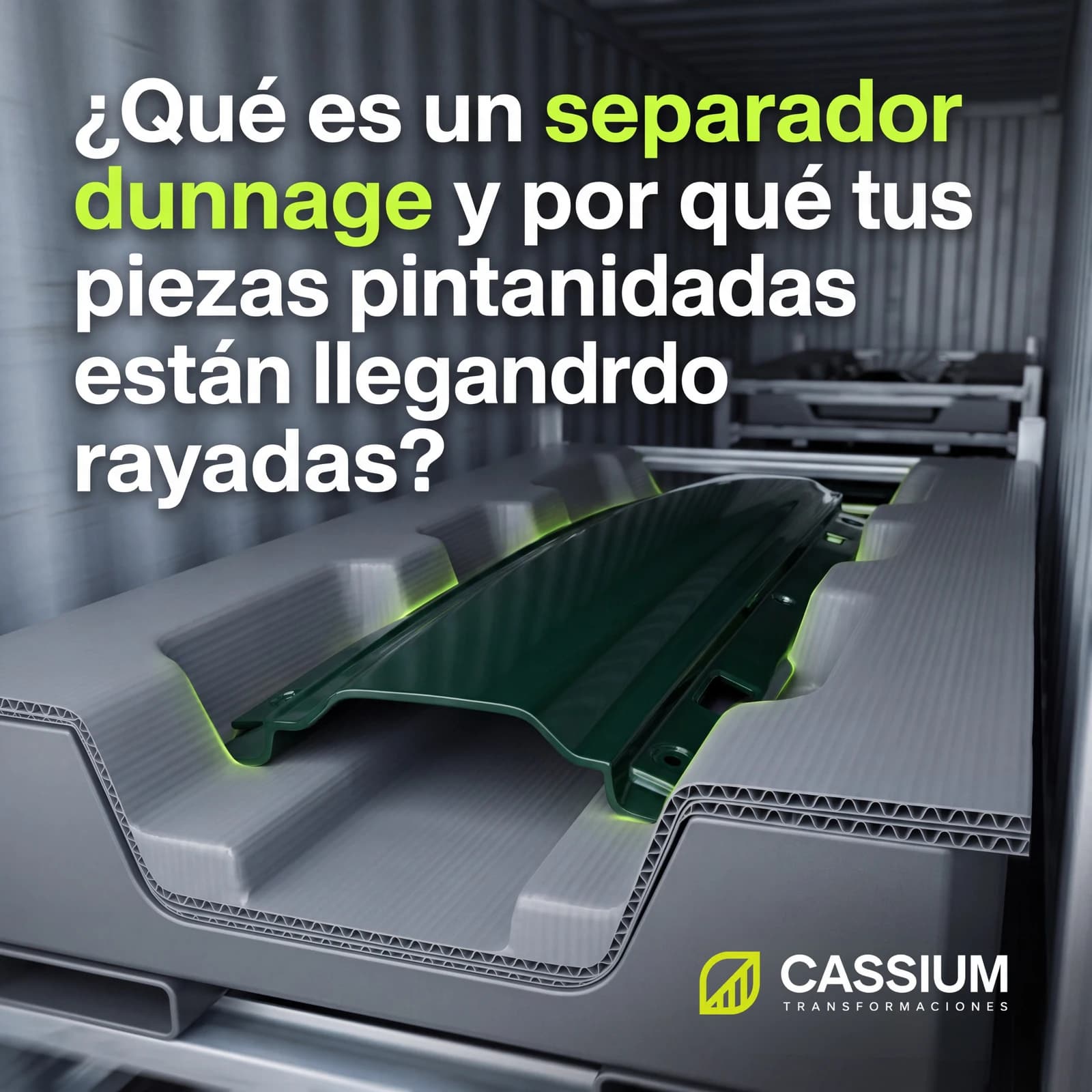
A dunnage separator is a packaging piece manufactured to the exact dimensions of a component, with cavities and supports designed to immobilize it inside the container without direct contact with other parts or rigid surfaces. It's designed from the part's real geometry, the point where its surface is most sensitive, and the type of handling it will receive during transport.
Why Corrugated Polypropylene Is the Right Material for This Application
The separator is manufactured in corrugated polypropylene, a material that doesn't scratch a painted surface the way a wood edge or a poorly cut cardboard edge can, and that withstands multiple closed-loop use cycles without losing its shape or holding capacity.
How a Well-Designed Separator Translates Into Less Scrap
When the separator is designed to fit the part, surface contact disappears, and with it the most common cause of scratching disappears too. At Cassium Transformaciones we design custom dunnage separators based on the real part from your operation, with cutting and folding processes that make it possible to fit each cavity to the exact geometry you need to protect.