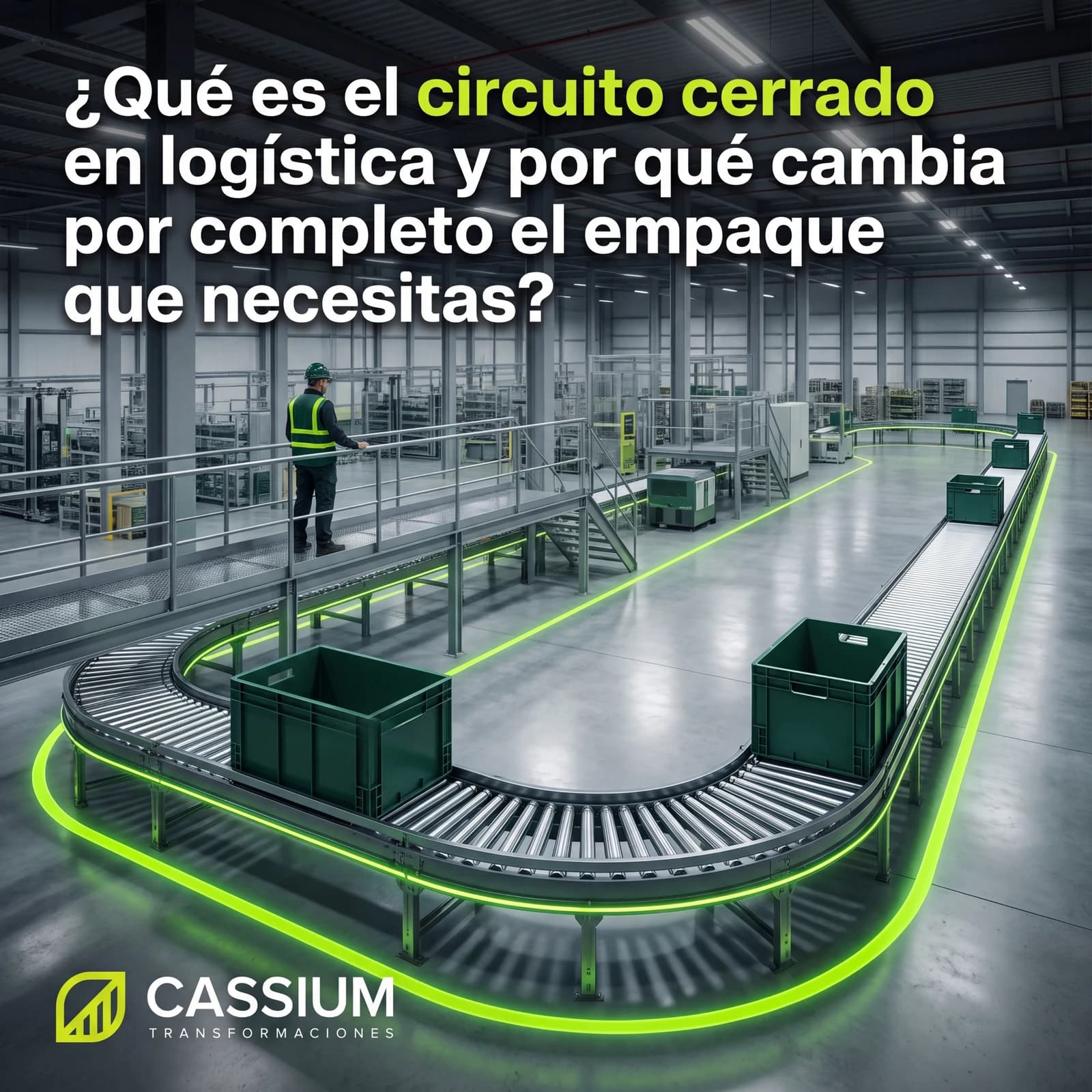
Why So Many Closed-Loop Operations Still Buy Disposable Packaging
Single-use packaging is the default standard across most supply chains, and many companies keep buying it out of habit without evaluating whether their specific operation already runs under a scheme where the same packaging could be reused on the next round.
The Clearest Sign You're Already Running a Closed Loop
If your company moves product between the same origin and destination points on a recurring basis, with vehicles returning empty or on a scheduled return trip, you already have the logistics infrastructure of a closed loop. The only thing missing is packaging designed to come back with you on that same trip.
What Changes When Packaging Is Designed for a Closed Loop
The Cost Per Use Drops With Every Cycle
A returnable box designed for multiple cycles spreads its cost across dozens of uses, while every disposable cardboard box is bought in full for a single trip. At Cassium Transformaciones we manufacture returnable boxes that sustain up to 40 documented uses under normal handling conditions.
Packaging Must Withstand the Return Trip, Not Just the Outbound One
A cardboard box can survive a single outbound trip. A closed loop requires packaging to also withstand the return trip, storage between cycles, and repeated loading and unloading, something cardboard isn't built to sustain.
How to Know If Your Operation Is Ready to Make the Switch
The first step is confirming whether your logistics already run as a closed loop, even if you never called it that: recurring routes, the same delivery points, and vehicles with a return trip. The second is defining the cycle volume you need to calculate how many shipments it takes to recover the initial investment against the constant expense of disposable packaging. At Cassium Transformaciones we manufacture everything from resin to finished product in Monterrey, with no intermediaries, which lets us adjust each returnable box's design to your operation's real routes and volumes.